Appalachia is in a new era of growth, and a defining race to lead the future of energy. Carbon capture, utilizationEQT: new term for U and storage (CCUS) is how we rise to that challenge, delivering energy that is affordable, reliable and low carbon.
CCUS captures carbon dioxide (CO₂) before it enters the atmosphere and safely transports it through steel pipelines for permanent storage deep underground or reuse in industrial applicationsEQT: new term for U. From reducing emissions to increasing production from existing wellsEQT: new term for U, CCUS helps unlock the full potential of Appalachia’s abundant natural gas resources, strengthening communities and creating lasting value for generations to come.
CCUS can bring new economic opportunity across Appalachia. It can attract investment in advanced manufacturing, technology and infrastructure, while supporting job creation and community benefits.

Fairfield County, Ohio
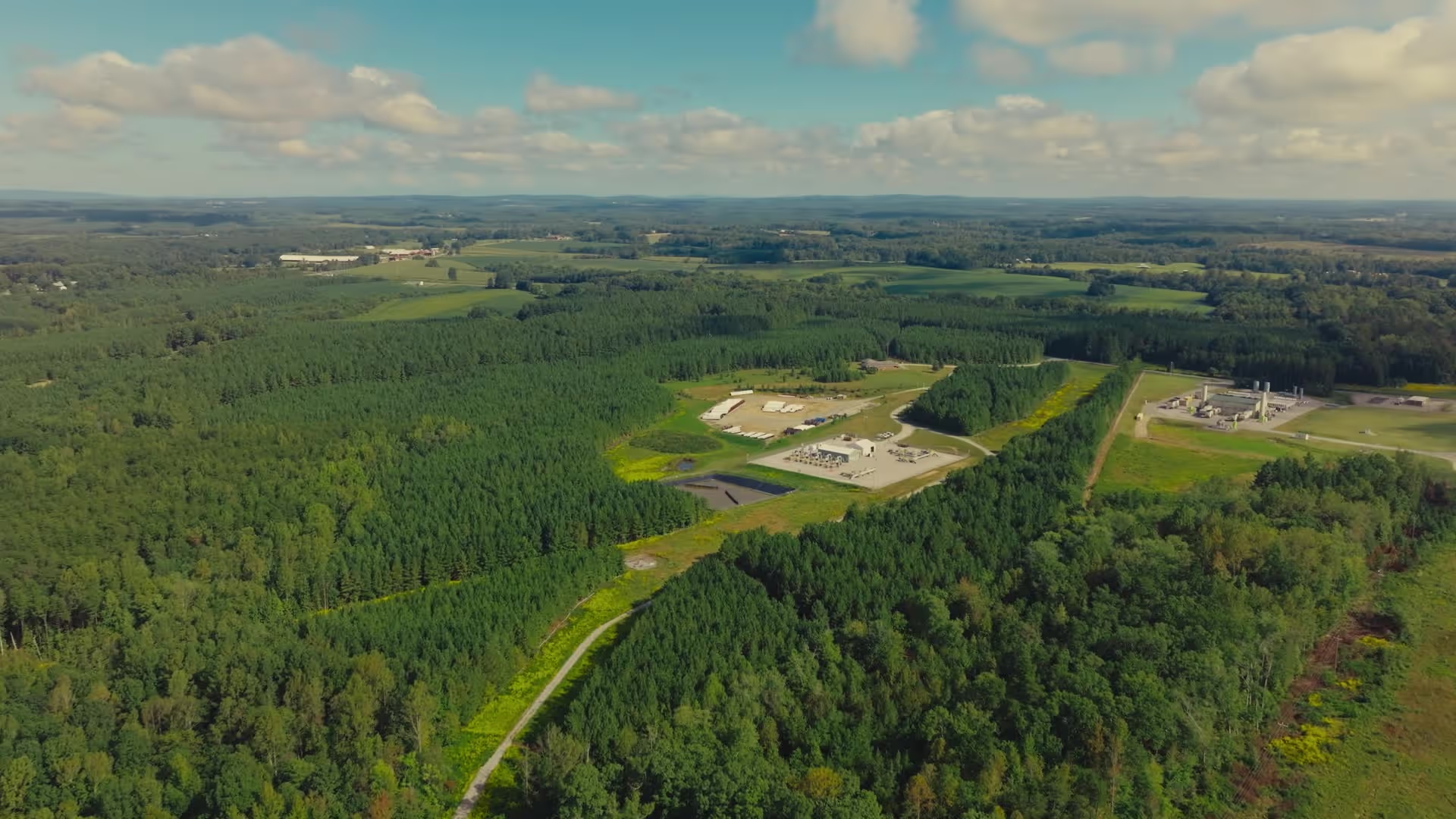
EQT is studying the rock thousands of feet below Amanda Township to learn whether it could one day store carbon dioxide safely. Today the work is research only. No carbon dioxide is stored or injected there.
Now to early 2027
Geologists study the rock deep underground to learn whether it could hold CO₂ safely.
2027
If EQT plans to move forward, it expects to say so in 2027. EQT will tell the community before any public announcement.
2028 to 2050
Nothing is built without approval from regulators. If approved, stored CO₂ is monitored around the clock.
After 2050
Wells are closed and the land is restored. Monitoring continues for decades, 50 years by default.
Questions? Call 380-291-1900
CO₂ is captured from industrial facilities, such as power plants and manufacturing plants, before it enters the atmosphere. It is then prepared for safe transportation.
Captured CO₂ is transported through specialized steel pipelines that are regulated and monitored for safety.
CO₂ is stored deep underground, far below drinking water sources, in carefully selected rock formations. Natural layers of solid rock above the storage area help keep the CO₂ trapped and prevent it from escaping.
Captured CO₂ can be put to work in useful ways, such as helping produce more oil and natural gas from existing wells or making products like concrete, fuels and chemicals.EQT: new term for U
Geologists look for underground rock formations that can hold CO₂, with thick layers of solid rock above them that help keep it securely trapped.
Once a site is selected, equipment is used to drill the storage well and build the pipeline. Afterwards, the surface is restored to the owner’s expectations. Landowners are compensated for the use of their land, both above and below ground.
Founded in 1888, EQT Corporation is a premier, vertically integrated American natural gas company with production and midstream operations focused in the Appalachian Basin. With operations in Pennsylvania, West Virginia and Ohio, we are dedicated to the development of our world-class asset base. As one of the leading producers and movers of natural gas in the United States, we are committed to continually improving and creating long-term value for all stakeholders, including employees, landowners, communities, industry partners and investors.
By pairing our operational expertise with CCUS innovation, we’re advancing emissions management while unlocking the full potential of our energy assets and driving progress for our communities, customers and stakeholders.

Founded in 1888, EQT Corporation is a premier, vertically integrated American natural gas company with production and midstream operations focused in the Appalachian Basin. With operations in Pennsylvania, West Virginia and Ohio, we are dedicated to the development of our world-class asset base. As one of the leading producers and movers of natural gas in the United States, we are committed to continually improving and creating long-term value for all stakeholders, including employees, landowners, communities, industry partners and investors.
CCUS is a process that captures carbon dioxide (CO₂) before it enters the atmosphere, securely transports it through steel pipelines, and either permanently stores it deep underground or puts it to beneficial use in industrial applications. Watch the video above to learn more about CCUS.EQT: new term for U
The process consists of four main steps:
CCUS is a well-established technology that builds on decades of underground storage experience in the United States. Storage sites are carefully selected for their ability to contain CO₂ deep underground, using natural rock formations that help prevent it from reaching the surface. Projects must meet strict permitting, testing, monitoring, and regulatory requirements for well construction, testing and monitoring, with multiple safeguards in place to protect people and the environment.
CCUS projects are regulated by the U.S. Environmental Protection Agency (EPA) or authorized federal or state agencies to administer programs. Projects must meet strict requirements for permitting operation, monitoring, and long-term stewardship.
Potential storage sites undergo extensive geological evaluation to ensure the safe and permanent storage of the CO2. Each site must also meet federal and state regulatory requirements before development.
For non-related emergencies, please contact our hotline anytime: 380-291-1900 or our email at ccusinfo@eqt.com.
For additional information and resources on Carbon Capture, Utilization, and Storage (CCUS), please visit the following resources:EQT: new term for U
Call or email us about CCUS or any EQT project near you.