Amanda Township, Fairfield County, Ohio

Fairfield County
‍Geologic Research

EQT is studying the rock thousands of feet below Amanda Township to learn whether it could one day store carbon dioxide safely. Today the work is research only. No carbon dioxide is stored or injected here.
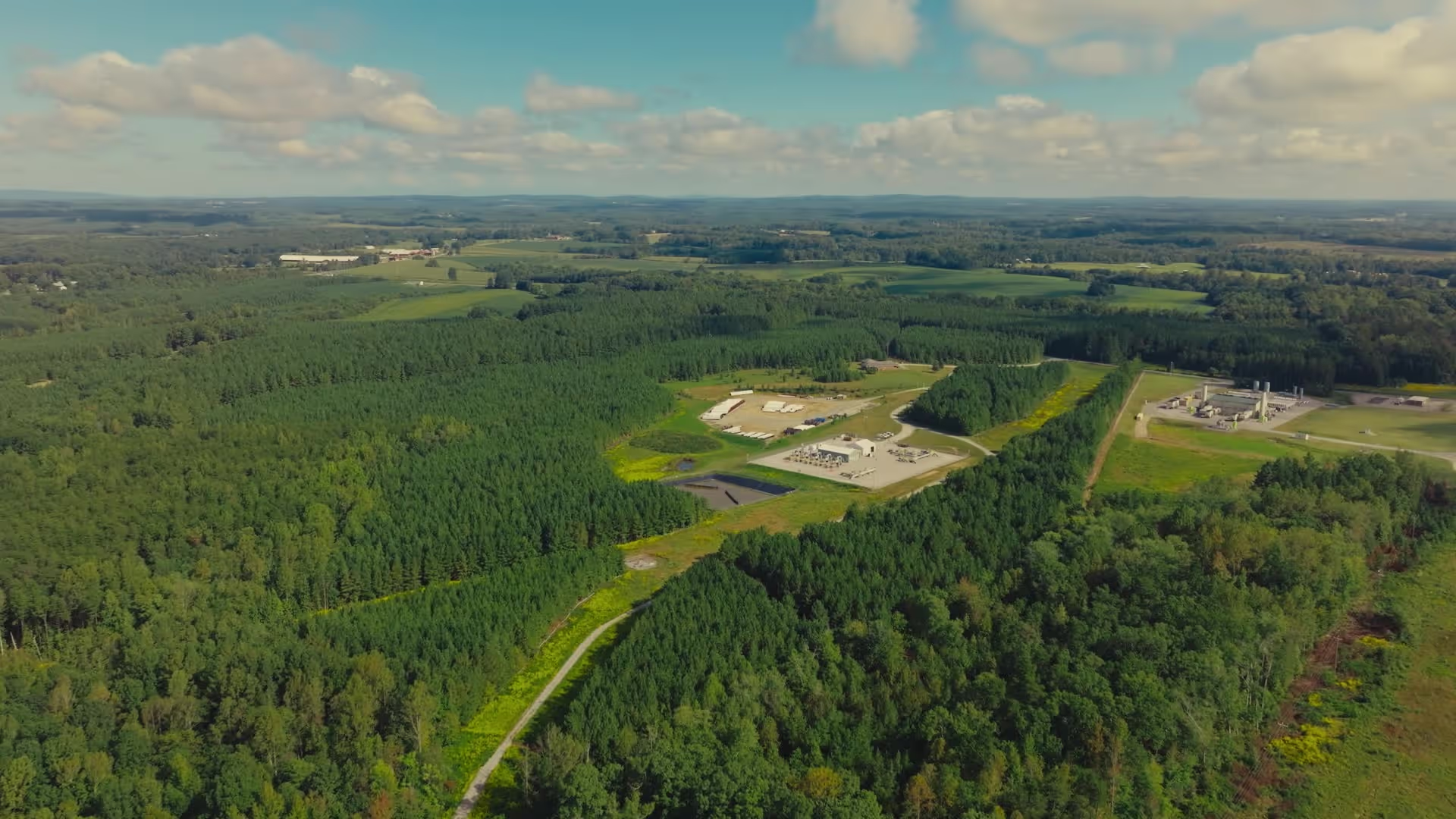
Aerial view of rolling farmland and forest with a small, cleared well site
Research phase
What it is
A stratigraphic test well that studies rock layers
CO₂ stored or injected
None
Storage permit
Not applied for EQT to confirm
Regulated by
Ohio Department of Natural Resources
Last updated November 2026. We update this page whenever something changes.
Overview

What's happening now, and what could happen later

The well in Amanda Township is a test. It collects information about the rock deep underground. That information tells regulators whether a carbon storage well could ever be built here.

Today

A research well

  • Drilled only to study rock layers, including how porous and permeable they are.
  • Collects data. Injects nothing.
  • Temporary. Ohio generally requires a test well to be plugged within one year of drilling.
  • Permitted and overseen by the Ohio Department of Natural Resources.
→
Only if approved
Possible future

A carbon storage well

  • A separate well built to federal Class VI standards, with layers of steel casing cemented in place.
  • Needs a U.S. EPA permit after a technical review and a public comment period.
  • The permit sets limits on how much, how fast and how deep.
  • Monitored for the life of the project and for decades after.

If the rock is not suitable, the research well is plugged, the land is restored, and that is the end of it.

Timeline

A long process, one step at a time

Studying and planning come first, through early 2027. Nothing would be built before 2028, and only if regulators approve it.

Project is here
2026 to early 2027

Study and plan

Drill and test the research well, study the results and meet with neighbors and landowners. EQT: describe planning work

What you'll notice
A drilling rig and truck traffic for a short period, then the site is restored.
Mid or late 2027

Decide and announce

If the rock looks suitable, EQT expects to announce a project. Neighbors hear from us first, before any public announcement.

What you'll notice
Letters, open houses and a public comment period on any permit.
2028 to 2050

Build and operate, if approved

Months of construction, then years of quiet operation under continuous monitoring.

What you'll notice
A small fenced wellhead with monitoring equipment. The surface around it is restored.
2050 and beyond

Close and keep watching

Wells are plugged and land restored. Monitoring continues for decades, 50 years by default, before the state can certify the project complete.

What you'll notice
Little to nothing above ground.

Dates are planning estimates and may change. Every change is posted in Updates.

Location

Where the research well is

The research well is in Amanda Township, in southern Fairfield County.

Map shows the township. EQT to supply the site pin in order to display map.

Site facts

Township
Amanda Township
County
Fairfield County, Ohio
Distance to nearest school
EQT to confirm
Site size
EQT to confirm
Public record
Community benefits

What Fairfield County could gain

The research itself brings local work and gives the county solid data about its own geology. A storage project, if approved, would bring more.

New to carbon storage? See how it works →
  1. 01

    A fund for the community

    Ohio law sets aside three cents for every metric ton of CO₂ stored. It is paid into a host community fund that county commissioners, townships, villages and school districts can use for roads, parks, schools and public safety.

  2. 02

    Local work and spending

    Drilling and construction crews, local suppliers and services.

  3. 03

    Payments to landowners

    Landowners are paid for the use of their land above and below ground, under a lease they choose to sign.

  4. 04

    Cleaner air for the region

    Every ton stored is a ton that never enters the air. Storage helps hard-to-clean industries such as steel and cement cut their emissions.

Landowners

Your land, your pore space

If you own the surface, you very likely own the pore space beneath it: the tiny openings in deep rock where CO₂ could be stored. Older mineral or oil and gas leases do not include it unless they say so.

  1. 1

    Nothing changes today

    The research well needs no agreement from neighbors and gives no one rights to your pore space.

  2. 2

    Leasing is your choice

    Pore space can be used only through a lease you sign or a state-approved process, and either way you are paid. Owners who talk with us early have the most say in their terms.

  3. 3

    About the 70% rule

    Under Ohio's carbon storage law (HB 170), the state can include remaining owners only after owners of at least 70% of the pore space agree. First the operator must make three documented attempts to reach every owner and negotiate in good faith. The state must then find the project reasonably necessary and give public notice before it decides. Every owner is paid.

  4. 4

    If something goes wrong

    Owners can recover any loss in property value caused by CO₂ moving beyond the storage area. An operator that violates its permit loses its protection from punitive damages.

Have questions about your property? A member of our land team will explain the process, potential land use and payment.

Safety and oversight

How water, schools and land are protected

The research well carries no CO₂. A storage well could only be built under a federal permit designed to protect underground drinking water, with Ohio oversight on top.

Cross-section from EQT's CCUS flyer: fresh water near the surface, solid rock layers, an impermeable cap rock, then porous rock where CO₂ is stored, thousands of feet down.
Not every location is suitable for CO₂ storage. Geologists lookfor underground rock formations that can hold CO₂, with solidlayers of rock above them that help keep it safely trapped.

Drinking water stays separate

The research well is cased and cemented through the freshwater zone like any regulated Ohio well. A storage well would hold CO₂ thousands of feet down, below sealing rock, and groundwater above it would be monitored.

Old wells are checked first

Before any injection, the operator must map every known well that reaches the storage or sealing layers and repair or plug any that could create a pathway.

Monitored around the clock

Pressure, rate and well integrity are watched 24 hours a day, every day of the year. Where the stored CO₂ goes underground is tracked too, for 50 years after injection ends by default.

A plan that covers schools

A storage permit requires an emergency response plan for the full project area, including the Amanda-Clearcreek schools. Deep underground, CO₂ moves through rock formations, not along the slope of the land above.

Who is in charge of what

Stage
Regulator
What they oversee
Stage
Research well (today)
Regulator
Ohio Department of Natural Resources
What they oversee
Drilling, construction, setbacks and plugging
Stage
Storage well (only if approved)
Regulator
U.S. EPA, Class VI program
What they oversee
The storage permit, monitoring and enforcement. Ohio does not issue these permits.
Stage
Storage project
Regulator
Ohio Department of Natural Resources, under HB 170
What they oversee
Pore space, consolidation and long-term responsibility
Stage
Any CO₂ pipeline
Regulator
Federal pipeline safety rules
What they oversee
Design, inspection and operation
!

What happened in Decatur, Illinois

At the first U.S. storage site, a corroded monitoring well let CO₂ move into a zone it was not permitted for in 2024. It stayed about 5,000 feet underground, far below groundwater about 200 feet down. EPA oversight caught it and required repairs. It is the kind of problem the monitoring rules exist to find.

FAQ

Questions neighbors ask

Each answer covers two stages: the research well today, and what would apply if a storage well were approved later.

The research well

What is being drilled in Amanda Township?+
Today

A stratigraphic test well. Ohio law defines this as a borehole drilled only to research the rock layers underground, including how porous and permeable they are. It collects data and injects nothing.

If approved

A separate injection well would be drilled and built to Class VI standards, with multiple layers of steel casing cemented in place. The test data is what regulators use to decide whether that well can be built at all.

Will carbon dioxide be injected here?+
Today

No. The current permit does not allow any injection.

If approved

Only after U.S. EPA issues a Class VI permit following a detailed technical review and a public comment period. Converting the test well would need the same full permit. The permit sets limits on volume, pressure and depth.

How long will the work last, and what will I see?+
Today

The test well is temporary. Ohio generally requires it to be plugged within one year of drilling, with extensions only under set conditions. Expect a drilling rig and truck traffic during that window, then site restoration.

If approved

Months of construction, then years of quiet operation. Above ground, an operating site is typically a small fenced wellhead with monitoring equipment.

Will the results be made public?+
Today

Ohio lets the owner of a test well keep its geologic data confidential for up to five years, a standard protection for business information. It then becomes public record. EQT: summary findings shared sooner?

If approved

The permit application, including the site's geology, monitoring plan and emergency plan, goes through public review before any decision. Monitoring reports are filed with EPA for the life of the project.

How storage works

What is carbon capture and storage?+
Today

Nothing is captured or stored here. The test well only measures whether the rock could hold CO₂ safely.

If approved

CO₂ would be captured at an industrial facility before reaching the air, compressed, carried by regulated steel pipeline and injected into porous rock deep underground. A thick layer of cap rock above keeps it sealed in place permanently.

How does this help the environment?+
Today

The research shows whether this region can help cut emissions from Appalachia's growing industries.

If approved

Every ton stored is a ton that never enters the air. Capture works best at large sources such as power plants, steel mills and cement plants, alongside other clean-air controls, not in place of them.

Is this a new, unproven technology?+
Today

Test wells like this are a routine first step used across the country before any storage decision.

If approved

Nearly 400 million tons of CO₂ have been stored worldwide, and more than 900 large-scale projects are operating, under construction or in development. The U.S. has decades of experience storing gas underground.

Would the CO₂ be used to produce more oil or gas?+
Today

No CO₂ is involved at this stage.

If approved

A Class VI well is for permanent storage only. Using CO₂ to boost oil or gas production is a separate activity under a different permit, with its own review. EQT to confirm intended use

Water, safety and schools

Is my drinking water safe?+
Today

The test well is cased and cemented through the freshwater zone like any regulated Ohio well, and it carries no CO₂.

If approved

The Class VI program exists to protect underground drinking water. CO₂ would be stored thousands of feet down, below sealing rock, and groundwater above would be monitored.

The Amanda-Clearcreek schools are nearby. Are students at risk?+
Today

No CO₂ is present at the site, so the test well poses no CO₂ risk to the schools.

If approved

Stored CO₂ moves according to the rock thousands of feet down, not the slope of the land above. The permit would require an emergency plan covering the full project area, including the schools. EQT: distance and setback

How would a storage site be monitored?+
Today

The test well operates under ODNR rules for drilling, construction and plugging.

If approved

Continuous monitoring of injection pressure and rate, regular well integrity tests and tracking of the stored CO₂ underground, around the clock. Monitoring continues after injection ends, for 50 years by default.

Fairfield County has old oil and gas wells. Could CO₂ escape through them?+
Today

The test well's data helps identify the rock layers and any existing wells that matter for a future decision.

If approved

This is one of the first things a Class VI review checks. Every known well that reaches the storage or sealing layers must be mapped, and any that could create a pathway repaired or plugged before injection is allowed.

Landowner rights

Who owns the space underground where CO₂ would be stored?+
Today

You probably do. Ohio's HB 170 confirms that pore space belongs to the surface owner unless it was sold separately. Older mineral or oil and gas leases do not include it unless they say so.

If approved

Your ownership stays the same. Pore space could be used only through a lease you sign or a state-approved consolidation, and either way you are paid.

Can I be required to participate if I don't sign a lease?+
Today

No. The test well needs no agreement from neighbors and gives no one rights to your pore space.

If approved

Only after most of the area agrees. The operator must make three documented attempts to reach every known owner and negotiate in good faith. It can ask the state to consolidate only after owners of at least 70% of the pore space consent, and the state must find the project reasonably necessary, with public notice first.

Will I be paid?+
Today

Landowners hosting the test well are paid under their agreements, and the surface is restored afterward. EQT to confirm

If approved

Landowners are paid for the use of their land above and below ground, through a negotiated lease or terms set by the state in a consolidation.

If something went wrong, could I recover damages?+
Today

Standard Ohio rules on well operations and property damage apply to the test well.

If approved

Yes. Owners can recover any loss in property value caused by CO₂ moving beyond the storage area. Operators that violate their permit lose protection from punitive damages.

Oversight and community

Who regulates these projects in Ohio?+
Today

The Ohio Department of Natural Resources, Division of Oil and Gas Resources Management, permits and oversees the test well, including drilling, setbacks and plugging.

If approved

U.S. EPA would issue and enforce the Class VI storage permit, since Ohio has not taken over that program. ODNR would also oversee the project under HB 170, and any CO₂ pipeline would fall under federal pipeline safety rules.

Who is responsible for the CO₂ over the long term?+
Today

There is no stored CO₂. The test well's owner is responsible for plugging it and restoring the site.

If approved

The operator, through injection and for decades after. Responsibility could pass to the State of Ohio only after it certifies the project complete, generally no sooner than 50 years after injection stops, with public notice and comment first.

What does the community gain?+
Today

Local drilling activity and spending, and solid data about the county's own geology.

If approved

Three cents per metric ton of CO₂ stored goes into a host community fund for schools, townships and public safety. Plus construction jobs, local spending and lease income. EQT: local commitments

Who is behind the research well?+
Today

EQT to confirm operator and well name before launch EQT is one of the largest natural gas producers in the U.S., founded in 1888, with operations in Pennsylvania, West Virginia and Ohio.

If approved

EQT would operate the project and stay responsible for it for decades, with regulators and the community kept informed through this page.

Updates

News and project records

Every change in the project is posted here first, with the date.

Nov 2026
Research well drilling update EQT copy
Well
Oct 2, 2026
Community FAQ published
Community
Sep 23, 2026
Ohio's carbon storage law, HB 170, takes effect
Law

Open houses

No date is set yet. Sign up below and you will hear about the next open house first. EQT: dates

Get updates

Documents

Carbon storage one-pagerPDF to upload
Research well one-pagerComing soon
Quarterly community reportFirst issue 2027
ODNR permits and filingsLink
Contact

Talk with a real person

Questions about the well, your property or the process? Call, email or send a note. We answer every message.

Community hotline
380-291-1900
Two EQT team members in hard hats reviewing plans on site

Send us a message

We reply within two business days. EQT to confirm

Thank you! Your submission has been received!
Oops! Something went wrong while submitting the form.