Energy Affordability In America: Why Is Electricity So Expensive?
There is not one single factor, but the data clearly shows that two regions are significantly outpacing the rest of the country in price increase: New England and California.

Scroll or tap on the maps, charts and graphs to explore the data.


Since 2020, New England and California have seen electricity prices increase at a rate three times that of the rest of the United States.
Hover (or tap on mobile) over the lines to see how much electricity costs have risen in New England and California compared to the national average.
Energy Prices Are A Regional Story
Electricity prices have not risen evenly across the country
- Most states have seen moderate increases.
- Two regions stand out: New England and California.
- In several of these states, prices have risen roughly three times faster than much of the country since 2020.
This is not a nationwide uniform spike. Within New England, the main driver is insufficient natural gas infrastructure.
Infrastructure Did Not Keep Pace
Over the past decade:
- Major interstate pipeline projects into New England were cancelled or blocked.
- Transmission buildout has lagged load growth.
- Permitting timelines extended into years.
The result:
- Increased winter price spikes.
- Greater reliance on emergency measures.
- Higher average retail prices.
Electricity affordability is fundamentally tied to whether supply can move to where it is needed.
The Inflection Point: 2020
The 2010s were characterized by relatively stable national and regional electricity prices. Beginning in 2020, New England began to separate from the rest of the country in its electricity costs as demand outpaced accessible supplies.
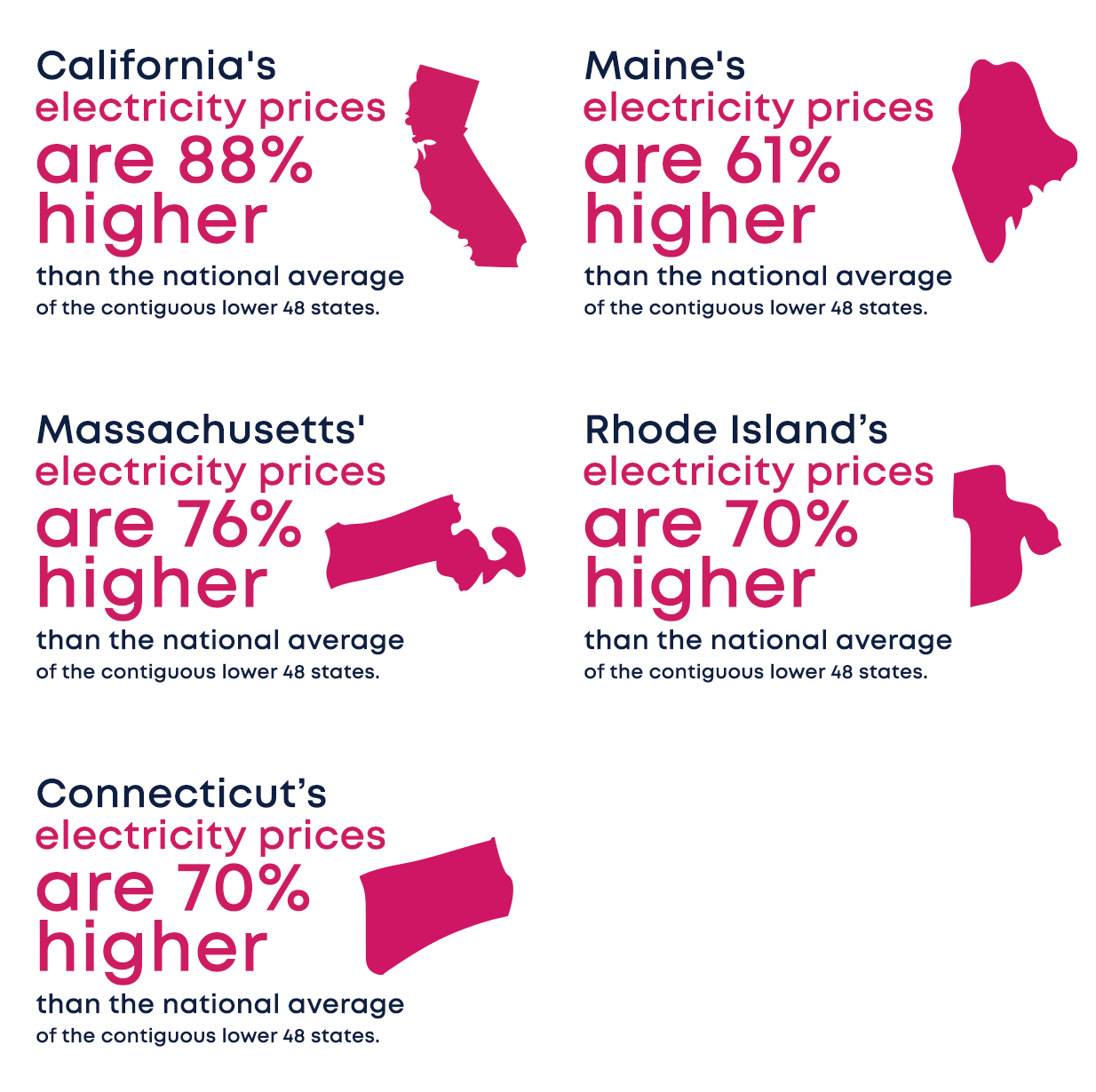
- California
- Maine
- Massachusetts
- Rhode Island
- Connecticut
These states began separating from national trends.
The question is not whether prices increased.
The question is why these regions saw the biggest price spikes.
Hover (or tap on mobile) over the lines to see how much electricity costs have risen in New England and California compared to the national average.
When Supply Is Constrained, Prices Spike
New England has actively opposed new natural gas infrastructure in recent years, resulting in cancelled pipeline projects. At the same time, natural gas demand has grown in the region and is increasingly relied upon to meet winter peak demands.
Constrained energy infrastructure and limited fuel access has lead to increased volatility, with more frequent and higher spikes in costs.
Within Appalachia, the source of natural gas for the cancelled infrastructure, prices have remained stable. This is an infrastructure issue, not a resource issue.
Hover (or tap on mobile) over the lines to see how much electricity costs have risen in the Northeast compared to Appalachia.
AI and LNG Exports Do Not Explain New England’s Cost Increases
LNG
States hosting nearly all U.S. LNG export facilities — including Texas and Louisiana — maintain below-average electricity prices. If exports were the primary driver, those states would be the most expensive. They are not.
Hover (or tap on mobile) on the dots to see how electricity costs in your state compare to states that export LNG.
AI/Data Centers
Electricity demand from data centers is growing. But many of the highest-cost regions saw price acceleration before large-scale AI demand growth.
Demand growth can stress systems. It does not explain persistent regional price divergence.
Hover (or tap on mobile) on the bars to see how electricity costs in your state compare to states that have the largest data center growth.
If The Problem Is Infrastructure, The Solution Is Reform
Energy markets respond to fundamentals: when supply expands, prices stabilize. When supply is constrained, volatility increases. Comprehensive permit reform would:

Accelerate critical infrastructure
Improve regional fuel access
Reduce seasonal price spikes
Strengthen reliability
Improve affordability
This is not about one fuel. It is about building infrastructure at the speed demand requires.
Fixing High Electricity Costs Starts with Real Energy Reform

Read the letter from EQT President and CEO Toby Z. Rice to Senator Warren, outlining the true drivers behind rising electricity prices and the steps our nation can take to lower costs.
The letter highlights the need to strengthen America’s energy infrastructure while also advancing meaningful permitting reform to accelerate critical energy projects, reduce bottlenecks, and ensure reliable, affordable power for consumers.
America Has The Resources. Now Is The Time To Build
The United States remains one of the most affordable electricity systems in the developed world. That advantage is not guaranteed.
- Price spikes are concentrated to two regions: New England and California.
- Infrastructure constraints are measurable.
- Affordability depends on buildout.
Explore the data.
See the divergence.
Support practical permitting reform.